Is German B2 Enough to Work as a Doctor in Germany?
Is German B2 Enough to Work as a Doctor in Germany?
What German level do doctors need in Germany? The honest answer is two levels, not one. You need general German at B2, and you also need medical German at C1, proved by passing the specialist language exam called the Fachsprachenprüfung. A B2 certificate on its own does not unlock Approbation, the full German medical licence. It does, however, open the door to everything that follows, because B2 is the minimum level that qualifies you to sit the medical language exam in the first place.
This question comes up constantly among international doctors planning a move to Germany, and for good reason. Germany’s hospitals rely heavily on doctors trained abroad: more than 68,000 doctors from abroad were already working in Germany when Ärzteblatt’s licensing guide was published, with numbers expected to rise further. If you are aiming at Approbation, the language bar is the first thing to get right, because it shapes your timeline, your costs and the order in which you do everything else.
What German level do doctors need in Germany? The two-part rule
Germany’s official recognition portal, Recognition in Germany, states the requirement plainly for doctors applying for Approbation: you require knowledge of German at level B2 of the Common European Framework of Reference for Languages, and you are also usually required to complete the specialist language examination at level C1. The medical education platform AMBOSS puts it the same way: to obtain a medical licence, language proficiency at C1 level in a professional context is required, proved by passing the Fachsprachenprüfung, while general language skills at a minimum of B2 are necessary to qualify for that exam.
Note the word “usually” in the portal’s wording. The portal adds that there are some exceptions in which you might not need the specialist language examination, and that the competent authority will inform you. Do not build your plan on an exception you have not confirmed in writing. For the overwhelming majority of applicants, the rule is B2 plus the C1 medical exam.
One piece of good news: you are not required to provide a language certificate when you first apply. The portal states you can provide evidence of your German at a later point in time, so you can start the recognition procedure while you are still working towards the exams.
What B2 actually means in practice
B2 is the upper-intermediate level of the CEFR scale. At B2 you can follow discussions, understand the main points of complex texts on familiar matters, and hold a conversation with a native speaker without strain on either side. Our guide to CEFR levels explains what each level really means and how to pick your target.
That is real, useful fluency. It is also not clinical fluency. Taking a full patient history, explaining a difficult diagnosis in plain language, writing a discharge letter that another doctor can act on, and handing over a deteriorating patient to a colleague at 2am are different skills from chatting confidently about your weekend. The gap between everyday B2 and safe clinical communication is exactly what the Fachsprachenprüfung exists to test.
What the C1 medical exam (Fachsprachenprüfung) involves
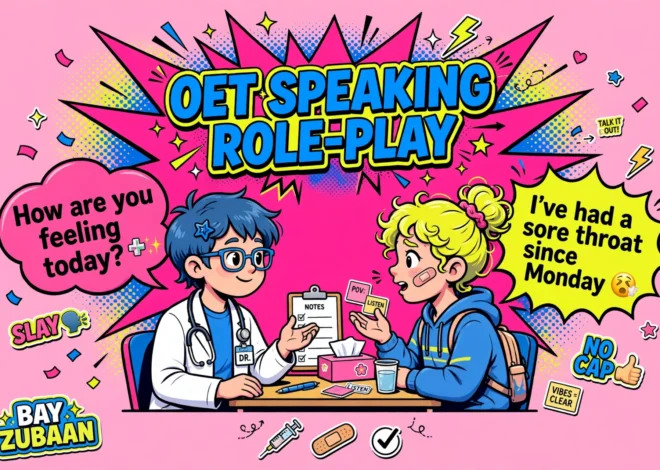
The Fachsprachenprüfung, usually shortened to FSP, is organised by the regional medical associations, the Landesärztekammern. It typically lasts about 60 minutes and has three parts:
1. Doctor-patient conversation. A simulated consultation in which you take a history and explain findings and plans.
2. Documentation. A written summary of the consultation in the form of a medical report.
3. Doctor-doctor conversation. Handing the case over to a colleague and answering medical questions about it.
The goal, as AMBOSS describes it, is proof of linguistic competence for medical practice: that you can communicate clearly in German medical language with patients, nursing staff and colleagues alike. Specialist language courses exist to prepare candidates, teaching anamnesis interviews, doctor’s letters and exam simulation under realistic conditions.
What B2 alone does get you
B2 is not a dead end. It gets you three concrete things. First, it lets you apply for recognition, since the language certificate can follow later. Second, it qualifies you to sit the Fachsprachenprüfung. Third, it gives you the everyday German you need to live, settle in and study effectively once you are in Germany.
What it does not get you is any licence to practise. AMBOSS is explicit that the temporary work permit, the Berufserlaubnis, is only granted after passing the Fachsprachenprüfung. So the sequence matters: B2 first, then the medical exam, then a temporary licence while you finish the rest of the process, then Approbation. Anyone promising you a doctor’s post on B2 alone is skipping the step the authorities will ask about first.
EU doctors vs non-EU doctors: does the language rule change?
The language requirement itself does not change, but the rest of the route does. If your degree comes from the EU, EEA or Switzerland, recognition is usually automatic: there is no individual equivalence assessment, and the knowledge test is not required. You still need the Fachsprachenprüfung before Approbation is granted.
If your degree comes from outside the EU, the authority compares your training with the German qualification in an equivalence assessment. If it finds significant differences, you must also pass the Kenntnisprüfung, an oral-practical medical exam based on the German state examination, covering areas such as internal medicine, surgery and emergency medicine. The language bar is the same either way: B2 plus the C1 medical exam.
How much do the language exams cost, and how long does it take?
Costs vary by federal state, so treat every figure as a range. Recognition in Germany’s worked example for Cologne in North Rhine-Westphalia puts the recognition procedure at 150 to 700 euros, with the specialist language examination at about 400 euros. AMBOSS gives a wider range for exam fees across states, from 390 to 1,100 euros, plus translations, certifications and preparation courses.
On timing, the portal says that once your documents are complete, the recognition procedure takes a maximum of four months, and for EU qualifications it is often shorter, at most three months. AMBOSS cautions that there is no fixed overall timeline, because preparation time depends on your starting language level and on whether a knowledge test is needed. Budget for months, not weeks, and let the language exams set the pace.
From B2 to exam-ready: a realistic study path
The jump from general B2 to medical C1 is smaller than the jump from zero to B2, but it is a different kind of learning. You are not learning more grammar; you are learning the professional language of history-taking, examination findings, documentation and handover. Specialist language courses are built for exactly this, and they simulate the exam under realistic conditions.
Build the habit around the three exam parts: practise consultations out loud, write short case summaries and rewrite them until they read like a real report, and explain cases to a study partner as if handing over. If your general German still wobbles, our realistic plan for reaching B1 in three months and our guide to the best apps for learning German in Germany are useful starting points, and our 50 basic German words list covers the everyday vocabulary that keeps daily life running while you study.
One warning: a general C1 certificate is not the same as passing the Fachsprachenprüfung. The exam tests professional communication in medical situations, not general fluency, so prepare for the exam itself rather than assuming a higher general level will carry you through.
The state-by-state catch
Germany’s 16 federal states run their own competent authorities, and the details differ: fees, exam arrangements and document requirements all vary by state. The figures in this article come from the national portal’s Cologne example and from AMBOSS’s cross-state ranges, so treat them as orientation, not as a promise for your state. Before you commit money or a moving date, confirm three things with the authority in the state where you want to work: whether you need the Fachsprachenprüfung, which B2 certificates it accepts, and the current fee. The portal itself says the competent authority will inform you, so ask early and get the answer in writing.
The short version
Is German B2 enough to work as a doctor in Germany? No, not on its own. B2 is the entry ticket: it lets you apply, and it qualifies you to sit the Fachsprachenprüfung. Approbation needs that C1 medical exam on top. Plan for both levels, in that order, and the rest of the process falls into place.
Frequently asked questions
Is German B2 enough to work as a doctor in Germany?
No. B2 alone does not lead to Approbation. You also need to pass the Fachsprachenprüfung, the C1 specialist language exam, which tests medical communication with patients and colleagues.
What German level do doctors need in Germany for Approbation?
What German level do doctors need in Germany? General German at B2 plus medical German at C1, proved by the Fachsprachenprüfung. B2 is the minimum level that qualifies you to sit the medical exam.
Can I apply for Approbation with only B2?
You can start the recognition application without a language certificate, since evidence of German can be submitted later, but Approbation itself will not be granted until the language requirements are met.
What happens in the Fachsprachenprüfung?
The exam lasts about 60 minutes and has three parts: a simulated doctor-patient consultation, a written documentation task, and a doctor-doctor conversation in which you hand over the case.
Do EU doctors also need the medical language exam?
Yes. EU, EEA and Swiss degrees are usually recognised automatically with no equivalence assessment, but the Fachsprachenprüfung is still required before Approbation.
How much does the Fachsprachenprüfung cost?
Costs vary by federal state. The national recognition portal’s Cologne example puts the exam at about 400 euros, while AMBOSS reports exam fees ranging from 390 to 1,100 euros depending on the state.
Sources
Recognition in Germany (Federal Institute for Vocational Education and Training), recognition procedure for doctors of medicine in Cologne, North Rhine-Westphalia, downloaded 24 October 2026: Recognition in Germany, doctor of medicine, Cologne.
AMBOSS, Medical licensing (Approbation) for foreign doctors in Germany: AMBOSS Approbation guide.
Ärzteblatt, How to obtain a licence to practise medicine: seven tips for foreign doctors (source: BIBB Anerkennungs-Finder): Ärzteblatt licensing tips.