









13 mins read
OET reading sub-test: The OET Reading sub-test gives you 60 minutes, 42 questions and three…
OET reading sub-test: The OET Reading sub-test gives you 60 minutes, 42 questions and three very different kinds of reading. Part A rewards speed, Part B rewards judgement and Part C rewards depth. Candidates who treat all three parts the same way tend to run out of time in exactly the wrong place, so the […]
Is German B2 Enough to Work as a Doctor in Germany? What German level do doctors need in Germany? The honest answer is two levels, not one. You need general German at B2, and you also need medical German at C1, proved by passing the specialist language exam called the Fachsprachenprüfung. A B2 certificate on […]
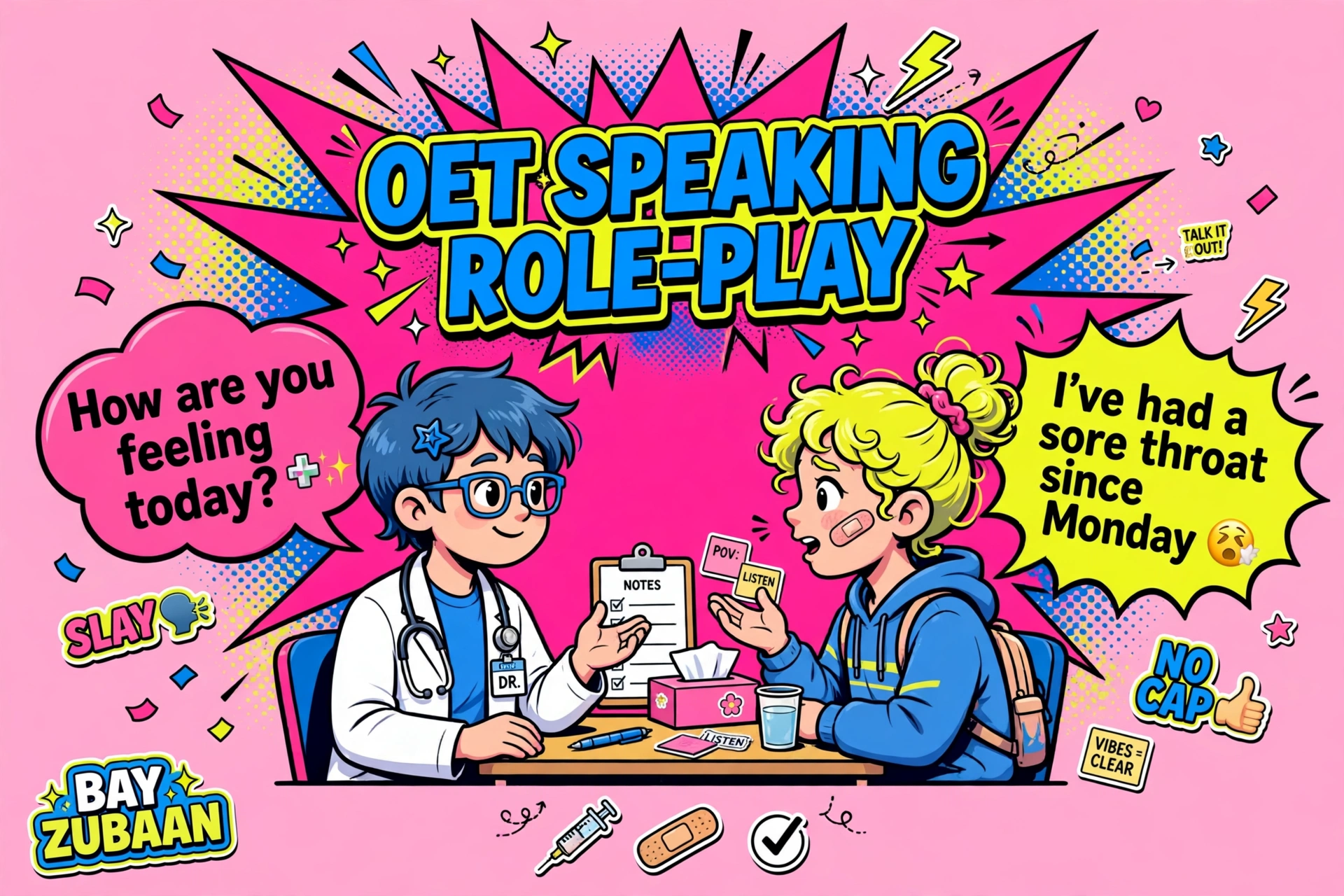
What Happens in the OET Speaking Role-Play? What happens in OET speaking test? In the OET speaking test, you complete two profession-specific role-plays with a trained interlocutor who plays a patient, a relative or a carer, with about five minutes of conversation and three minutes of preparation for each. The whole exchange is recorded and […]
The short answer You pass the OET Writing sub-test by producing a professional letter of 180 to 200 words that states its purpose in the first two sentences, includes only the case-note information the reader needs, and follows the six assessment criteria the examiners mark against. Most healthcare boards require grade B in each sub-test, […]
Is OET Accepted in the USA? What Doctors Need to Know for 2026 Short answer: Is OET accepted in the USA? Yes. For doctors, the Educational Commission for Foreign Medical Graduates (ECFMG) accepts the Occupational English Test (OET) Medicine as the English and communication-skills requirement for certification, and it has done so since the Pathways […]
The 80/20 Rule for Learning German: The Few Words That Unlock Most Conversations Short answer: What is the 80/20 rule in German? It is the observation that a small share of German vocabulary does most of the work in everyday conversation, while the vast majority of words appear rarely. The split is a rule of […]
50 Basic German Words Every Beginner Should Know First Short answer: What are 50 basic German words for beginners? The highest-value fifty are: 8 greetings and polite words, the numbers 1 to 10, the 7 days of the week, 10 everyday verbs, 10 common nouns learned with der, die or das, and 5 question words. […]
Can You Reach B1 German in 3 Months? A Realistic Plan Short answer: Yes, but only with three to four hours of focused study every single day. The Goethe-Institut estimates 260 to 490 guided hours to reach B1 German from zero, and three months of daily study at that pace gives you roughly 270 to […]
Why Do Urdu and Hindi Speakers Say "Informations"? Countable and Uncountable Noun Rules That Fix It Short answer: In English, nouns like information, advice, furniture and news are uncountable, so they never take "a", "an" or an "-s" plural. In Urdu and Hindi, the same words commonly take plural forms in daily speech (mashware, maloomat), […]
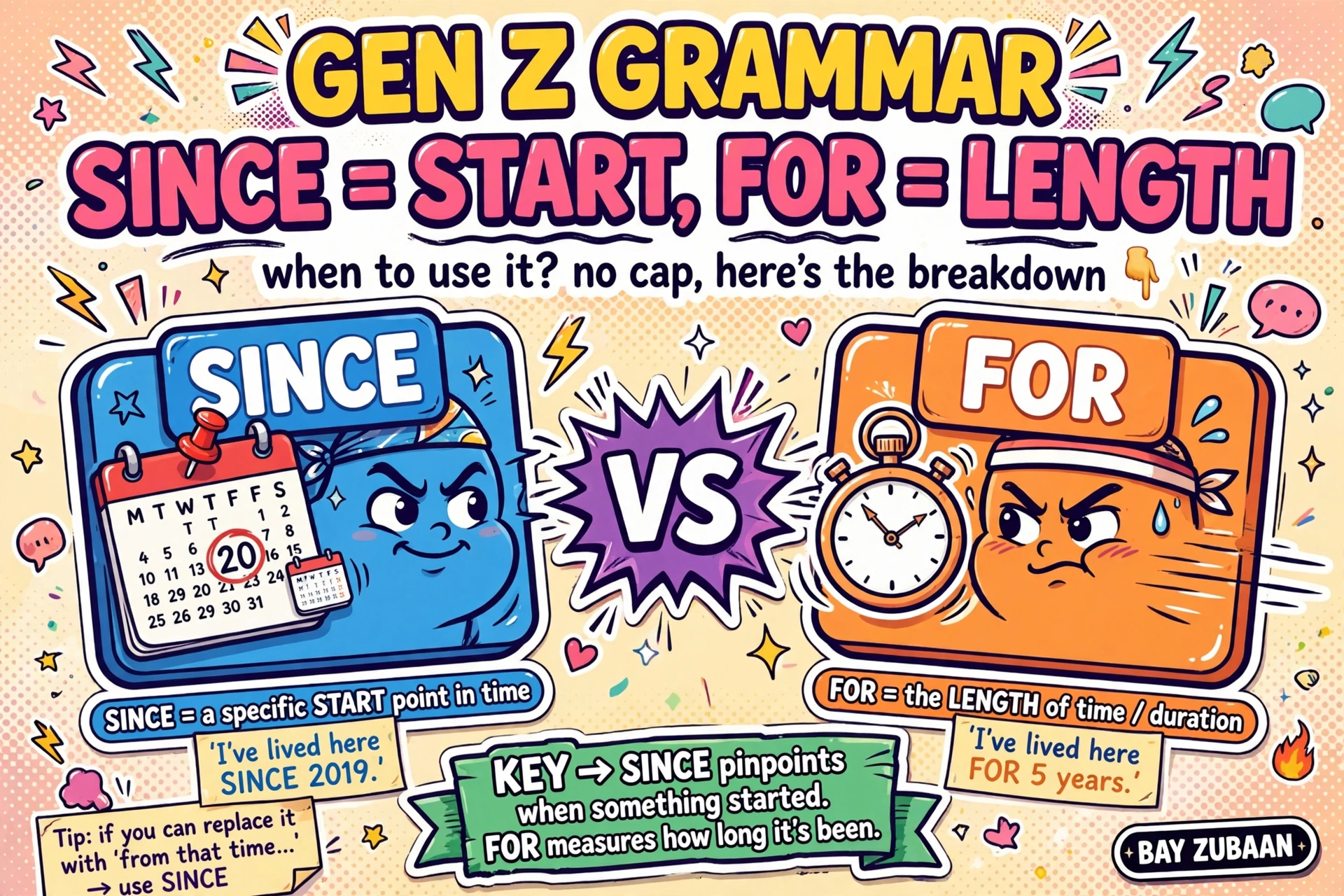
If you learned English in Lahore, Delhi, Karachi or Mumbai, there is one small grammar question that has followed you since your school days: do you say "since two years" or "for two years"? Most of us have said it wrong a hundred times, in exams, in job interviews and in WhatsApp messages to native […]